


[an original Marshall Supa Fuzz]
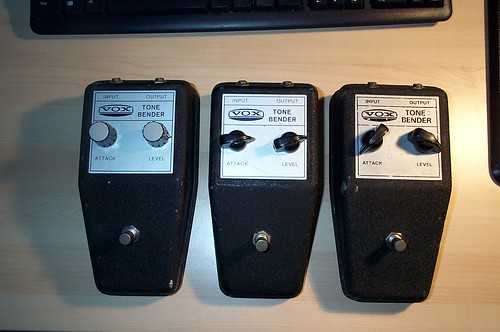
[three original Vox Tonebenders]
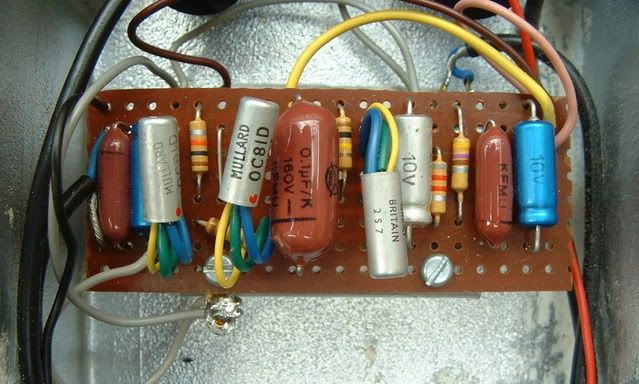
[a Tonebender MKII circuit with Mullard OC81 germanium transistors]

And here's a receipt for Jimmy Page's Tonebenders from SolaSound!

And here's a video of the D*A*M Tonebender MKII Professional in action, I think you'll agree it sounds pretty mind/ear/sense destroying:
Now here's the schematic. Here you can see the three transistor layout. As with any simple fuzz circuits the transistor type and gain is a huge factor in deciding the overall tone of the unit. It's recommended that the gain of Q1 ~ 70hfe with Q2 ~ 70-90hfe and Q3 ~ 100-120hfe. I've built many Tonebenders with many different type of transistors. Always use a germanium transistor for Q1, then you can experiment with low gain silicon transistors. Experiment and have some fun, you'll certainly find a decent fuzz tone or two! For some more detail on exact circuit operation and mods visit: http://fuzzcentral.ssguitar.com/mkII.php

References:
1) http://www.led-zeppelin.org/joomla/studio-and-live-gear/312
2) http://fuzzcentral.ssguitar.com/mkII.php
3) http://www.stompboxes.co.uk/History.html
4) http://theheliopolisofblossius.wordpress.com/2011/06/12/tone-bender-mkii-build/


hey,
ReplyDeletewhat i found is that the 100k pulldown at the input makes a tremendous difference to the available gain (and possible harshness). I read that the OC81Ds were fairly low gain (lower than you described) and had the 100k, whereas the OC75s were higher gain (probably within the "perfect" range) and had a 10k. Try your tonebender with a 10k, it will tame it alot and make the whole range of the fuzz control more useful. then adjust to taste, 20k, 50k, etc...
cheers
This comment has been removed by the author.
Deletei think this schematic needs a coupling cap between q1 and q2??
Deletemissing a coupling cap between q1 and q2???
ReplyDeleteHey daar, een kennis tipte me over een casino dat speciale acties heeft voor België en ik wilde het zelf ervaren. Ik registreerde me via rockyspin en probeerde Money Train 2, maar mijn eerste spins waren teleurstellend. In plaats van op te geven verhoogde ik mijn inzet licht en activeerde een sterke bonusfeature met mooie winst. Die onverwachte wending maakte de ervaring spannend genoeg om er later opnieuw te spelen.
ReplyDelete