Welcome to the Revolution

Hi there, welcome to my blog - La Revolution Deux. It's an odd name - but I like it! Here you will find all the info on my various DIY Guitar effects builds, amplifiers and guitars. Everything from a humble Ibanez tubescreamer to the holiest KLON Overdrive.

You may also find a few effects builds that I am looking to move on - usually in exchange for other effects/gear/cash. You can always check my ebay account to see what I've got up for grabs.

Have fun, enjoy the blog - Fred Briggs :-)

CONTACT ME


Feel free to get in contact with me about anything you see on this blog or with any general questions about guitars, amplifiers and effects, I'll be happy to answer! Just click the button above to email me directly or alternately my email address is fredbriggs2007 [at] googlemail [dot] com

Search This Blog

Thursday, 24 July 2008

BJF - LGW = Little Green Wonder


BJF (The designer behind the Mad Professor stuff spoke about his LGW (Little Green Wonder) pedal over on the freestompboxes forum. A schematic was provided:


As Bjorn pointed out there was a 1M resistor missing from the gate of the input buffers FET but I have now fixed that on the above schematic.

Here are a few quotes from BJF on the magnificent Little Green Wonder:

"LGW was made for those that really not could get along with standards
and the idea of it came to me in a request of what a BJF TS style would sound like and the guy told me he'd run a fuzz into TS's to smooth things....and so I wonder why would anyone do that as it would bring funny little artifacts ontop of sound aswell as cut all the lowmids and bass-oh yes I got this tested and listened and understood but still, and you know if headroom was higher this could be avoided and the basic filtering to the treble and then you could also use it with humbuckers and P-90's......."

"The first BJF LGW's were supplied with LF 353 which makes for higher headroom, but many wanted an alternative that would work at lower voltages and that would distort easierly thus TLC272 and for a time both chips were supplied but it caused problems so eventually only TLC 272 and a chip can be bought allover the world without problems."

Note the very unusual tone control that consists of a dual 20k pot! And the green LEDs used for clipping. Not your standard Tubescreamer type overdrive by a long way :-)

Many thanks to all at freestompboxes, and especially Bjorn of BJF for being so forthcoming and helpful about his design!

Check out the Little Green Wonder in operation;


Here are some layout files I was sent, I'm unaware who's they are;


Wednesday, 16 July 2008

HAO - Rust Driver


This thing is said to emulate a 69 Marshall Plexi 50W on 10... Hmmm, OK - Here's the scheme :


It looks like this one was drawn by the great matsumin, one of the legendary Japanese DIY bloggers! Check it out, it's a fairly simple build!

Here is the original PDF Manual: Link!

Here's a decent demo of Hao Rust Driver in action:


Once again. A big Thanks to the Freestompboxes guys for getting this info together and to the people who created it in the first place!

Expect more schemes soon - or just join freestompboxes for a sneak peak!

Wednesday, 2 July 2008

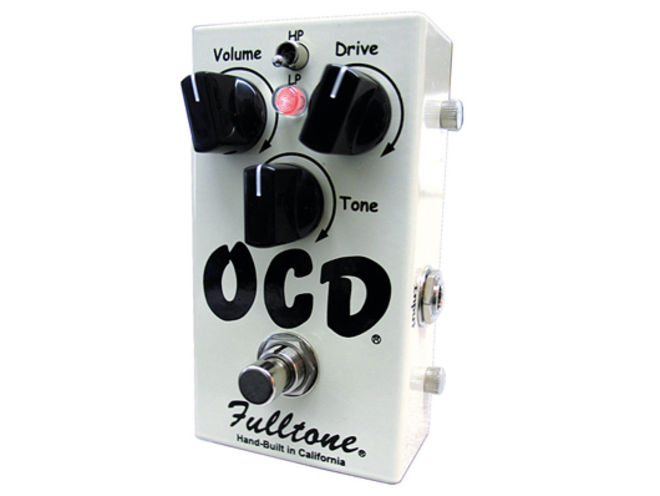
Fullclone VLOD - Fulltone OCD by Stratotrasto


Had a few requests for this, everyone knows what it does and everyone seems to like it. Anyway, here's the description from the Fulltone website:

"AMPS... if you've ever owned a GREAT amp, like a Marshall 18 watt, a VOX AC15 or a Marshall JTM45, and if you have a place where you can crank them up loud, then you know what I'm talking about. Smack a power chord and you (not only) hear the fundamental notes, but you get (count 'em) 4, 5, even 6 additional overtones ringing into a feedback... notes that you can whistle if your ear is good enough! Think Zep'sOcean or Custard Pie or classic tones, including James Gang, the Beatles, AC/DC, Free., and so on.

Back off the guitar's volume and there are a dozen great other sounds at your fingertips... Clean, spanky sounds, with all the highs and lows still intact. And a Tele still sounds like a Tele, a Les Paul like a Les Paul.

PEDALS... (until now) just can't hold a candle to what a good amp can do if you are really picky. You not only lose all the touch sensitivity, but forget about those complex Harmonics. (For me) It's always been somewhat of a compromise using Overdrive pedals... until now. Ladies and Gentleman, I am proud to introduce the Fulltone OCD. I made this pedal for me, but I think you might like it too."

Here's a demo video of the OCD in action;


And here's a schematic for the OCD (V4):

Fulltone OCD V4


As many will recognise this is nothing but a modified version of the Voodoo Labs Overdrive from many moons ago - allbeit a nice sounding one. Check out the Voodoo Labs Overdrive schematic below and compare it to the Fulltone OCD scheme:


The layout and scheme are provided and work of Stratotrasto of the freestompboxes forum! Many many thanks :-) (Notice he also provided the Zendrive project)

For those of you who prefer vero:


Now I get a lot of emails asking me about the differences between the V1, V2, V3 and V4 versions of the Fulltone OCD. Well here is a PDF file that details the differences between OCD V1, V2 and V3 - compare to the above schematic for the V4 differences and you've got all the info you need on the OCD, here it is: http://www.box.com/s/5ef844ca1fbe0571d91d

*NOTE* When building the OCD be careful to check the pinout of your clipping mosfets match up to the layout, also, you can leave out the germanium diode - this was included in V4 prototype but discontinued in the newest models..

**NOTE 2** If you like the OCD, why not try my redesigned "Super OCD", you can find the project file here: http://revolutiondeux.blogspot.co.uk/2012/02/fred-briggs-super-ocd.html

Monday, 30 June 2008

Vsex Tool - Zvex Machine


I've had a few emails requesting this scheme so here it is for you all to view :-)


Here's a demo video here:


And a short description from the Zvex Website:

"I designed this new distortion generator, Machine, with some different limitations. Like try playing chords through it. Hmmm. But put it in front of any string of fuzz pedals, and try to make it disappear. Machine is actually a dual frequency-tripler circuit that uses crossover distortion for the first time in any pedal, ever. It generates the distortion of the wave in the sloped part of the cycle, instead of the peaks and valleys like all other distorters and fuzzes. In other words, it distorts when your guitar string is in the middle of vibrating, while it's swinging, not as it's turning around. That's the same place where your speaker cone is sort of coasting, between all the way in and all the way out. Where nothing is happening, this pedal happens. With Machine you can leave your favorite distorting pedals on and still add a new element of energetic grind."

It's using frequency triplers like Tim Escobedo's "Tripple Fuzz", they sound pretty cool (The Lovepedal Karl also uses this circuit structure):


Thursday, 26 June 2008

Skreddy Mayo - Super Big Muff

[This post also includes info on how to build up a Skreddy Pink Flesh work-a-like]

Here is the schematic of the great Skreddy Mayo - a superb modification of the old Electro Harmonix Big Muff. The tone is supposed to be a match for the classic Big Muff Tone from The Smashing Pumpkins "Siamese Dream" album (The name of the pedal harks back to one of the song titles "Mayonnaise"). Now Marc swears by building these with the exact part type specified so if you want the sound - get the right parts. I built one up on breadboard and it was one of the best muff variations that I have played!
As you can see the scheme is drawn by Marc himself, thanks for that Marc, great stuff!

Now the Skreddy Pink Flesh - Marc himself posts that the mods you need to make to the Mayo circuit (apart from transistor selection!) would be:

C1 – 10u
C8 – 4.7n
Cx – 220-470p
C3 – 68n
Mid Boost: Switch in 4.7n parallel to C9
Add a 100R resistor after Dx

Here's a vero layout for it (Drawn by IvIark - http://www.tagboardeffects.blogspot.com, his site is great and has vero board layouts for just about everything!):

And finally a demo video: